

By Everest Hala and Mary Lyn Fonua
At the end of 2025, Tonga had five confirmed cases of people living with Human Immunodeficiency Virus (HIV), alongside more than 700 reported cases of sexually transmitted infections (STIs) such as syphilis and chlamydia, according to health authorities.
While the number of HIV cases remains low, information about the virus in Tonga has long been difficult to access. Matangi Tonga began investigating the issue last month following renewed attention by the World Health Organisation (WHO) on a growing HIV epidemic in neighbouring Fiji, where more than 1,226 HIV cases were recorded in the first half of 2025, up from an estimated 6100 in 2024. It is believed that this figure may include some Tongans who chose to be tested in Fiji.
This week, Dr Joseph Takai, Senior Medical Officer in charge of Communicable Diseases, told Matangi Tonga that he is very concerned with the situation in Fiji.
“Students going to Fiji for their studies are encouraged to take the tests of their own free will, whether they take the tests here or in Fiji, as long as they take the test.”
He said most students would rather take the HIV test in Fiji, “because they feel safer there since no knows them and [because of] the cultural stigma here in Tonga towards HIV as a disease.”
Tonga does not have enough manpower or resources to handle an HIV epidemic, Dr Takai said.
“The current five cases are enough, with our capacity of looking after HIV...that is why I feel it is most important to be prepared.”
Fear and stigma
In Tonga, discussions around HIV and other STIs continue to be heavily affected by fear and stigma. Although HIV is classified as a notifiable disease under the Public Health Act, the most recent publicly available HIV data found by Matangi Tonga dated back to 2016. Unlike Fiji, Tonga’s HIV statistics are not routinely published by the WHO.
When Matangi Tonga approached public health leaders and community organisations for information, several people initially agreed to speak but later withdrew their comments, highlighting the sensitivity surrounding HIV data. At the same time, many stressed the urgent need for better public education.
Dr Takai confirmed there were five people living with HIV and more than 700 STI cases by the end of 2025.
“These five people are living with the virus but they are very healthy and they look after themselves, they are undergoing antiretroviral therapy,” Dr Takai said.
He confirmed that one new case was identified in 2025, but it was linked to an existing case, meaning there were no new unrelated infections. One of the five individuals was first diagnosed in 2009 and remains under medical care.
Dr Takai said Tonga has no cases of acquired immunodeficiency syndrome (AIDS).
““HIV has been around for quite some time now here in Tonga, and although the number of infections is relatively low it is a disease that we still must look after properly because of the stigma and discrimination,” he said. “We are working on ways to improve HIV awareness.”
He added that while the situation in Fiji is concerning, Tonga’s focus must be on prevention, education, testing and treatment.
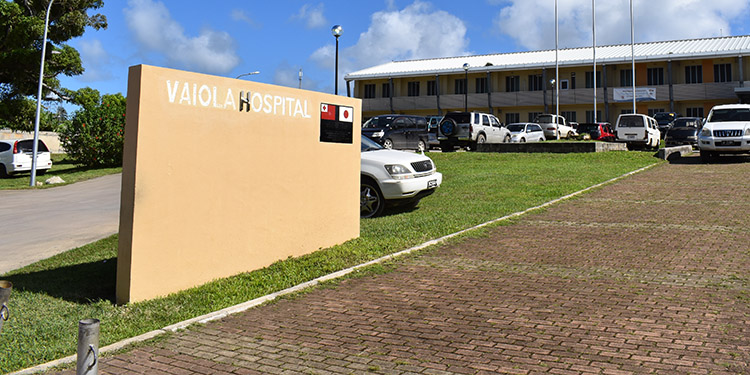
“HIV is preventable and manageable. ...When a patient is diagnosed HIV positive, they become HIV for life however they can be treated and with proper medical and personal care they can live long lives,” Dr Takai said. Vaiola Hospital provides antiretroviral (ARV) treatment for patients.
Since the first HIV case was diagnosed in Tonga in 1987, a total of 20 cases had been reported by the end of 2016, according to the Tonga Global AIDS Monitoring (GAM) Report 2017. Some of those individuals had died or returned to their countries of origin. Since then, only two additional cases have been identified. The report noted that the main known mode of HIV transmission in Tonga remains heterosexual contact.

Community Support and Testing
With funding support from the United Nations Development Programme (UNDP), the Ministry of Health works closely with the Tonga Leiti Association (TLA) and the Tonga Family Health Association (TFHA) to raise awareness about HIV and STIs.
Vaiola Hospital offers two types of HIV blood tests. Rapid DUO antigen tests provide results within 15 minutes and screen for both HIV and syphilis. Serology tests provide results within one to two days and screen for HIV, hepatitis B and syphilis.
The Tonga Leiti Association has been advocating for HIV screening for more than 30 years. The organisation conducts regular outreach programmes across Tongatapu and the outer island groups of Vava‘u, Ha‘apai and ‘Eua, with the Niuas included last year.
TLA holds free HIV and STI screenings every three months. Executive Director Joleen Mataele said around 300 people are screened annually.
“Alongside awareness programmes and free screenings, we also distribute free condoms in bar restrooms such as Ciora, Reload and Billfish as a way to prevent HIV and STIs,” she said.
Challenges in public awareness
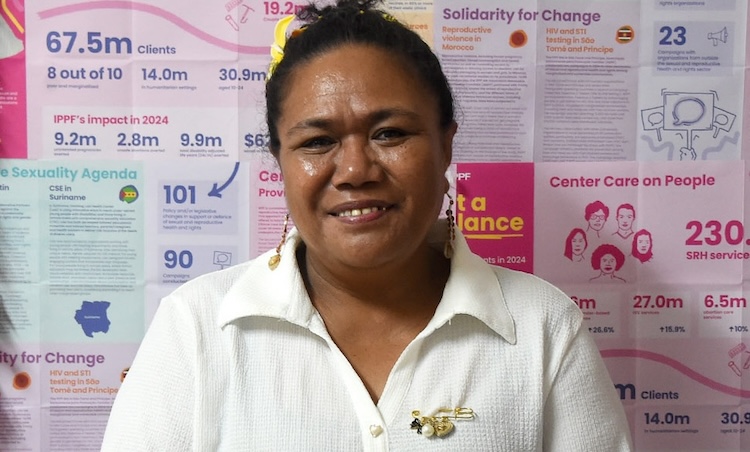
Tonga Family Health Association Executive Director Pelenatita Kara said improving public understanding remains a challenge.
“One of the things I want TFHA to do is publish the data we have every month,” she said. “I want to share tables showing the types of STI cases we see, so the public can understand what is happening, if there are growing numbers and issues that need to be addressed.”
Regional Concerns
Nancy Wong, Communications for Partnerships Officer for WHO’s South Pacific office, stressed the importance of early detection.
“HIV infections are a concern globally and the trend we see in Fiji could also affect other Pacific Island countries if not addressed early,” she said yesterday.
WHO is closely monitoring the situation across the Pacific, particularly in countries with strong travel, student and worker connections to Fiji. Efforts are focused on early detection, prevention and coordinated regional action.
Strengthening surveillance systems across Pacific Island countries, including Tonga, remains critical to tracking trends and ensuring an effective public health response.
Ms Wong said work is already underway to assess HIV and tuberculosis risks in ten Pacific Island countries, including Tonga, through a study supported by Australia’s Department of Foreign Affairs and Trade and the Burnet Institute.
She confirmed that Tonga has contributed data to the Global AIDS Monitoring report coordinated by UNAIDS, with WHO supporting the review process. According to the report, Tonga continues to conduct HIV testing among key populations and pregnant women, and treatment is provided to everyone diagnosed.
Protecting Public Health
Health officials encourage people to get tested for HIV at available health facilities. Consistent condom use during sexual activity greatly reduces the risk of HIV and other STIs. Avoiding the sharing of needles or syringes is also critical in preventing blood-borne infections such as HIV and viral hepatitis.
People diagnosed with HIV are urged to start antiretroviral treatment immediately to suppress the virus and prevent further transmission. Health leaders also stress the importance of staying informed and challenging misinformation.
HIV, they say, is not a death sentence. Early diagnosis, proper treatment and community support can lead to healthy, productive lives.