

The longer the US-Israeli campaign against Iran lasts, the greater the implications for the global energy system. Whereas short conflicts produce volatility, prolonged instability reshapes everything from trade flows to assessments of infrastructure risk and long-term investment behaviour.
By Carolyn Kissane
Mar 5, 2026 – The war with Iran is widening faster than many expected. The Islamic Republic’s retaliation against Arab Gulf states has extended beyond military targets to critical civilian infrastructure, including airports, water desalination plants, and energy facilities. Hezbollah has opened a second front from Lebanon. US President Donald Trump suggests that operations could last “four to five weeks,” but with nearly 50 senior Iranian officials having been killed, it is unclear who might be positioned to negotiate an off-ramp.
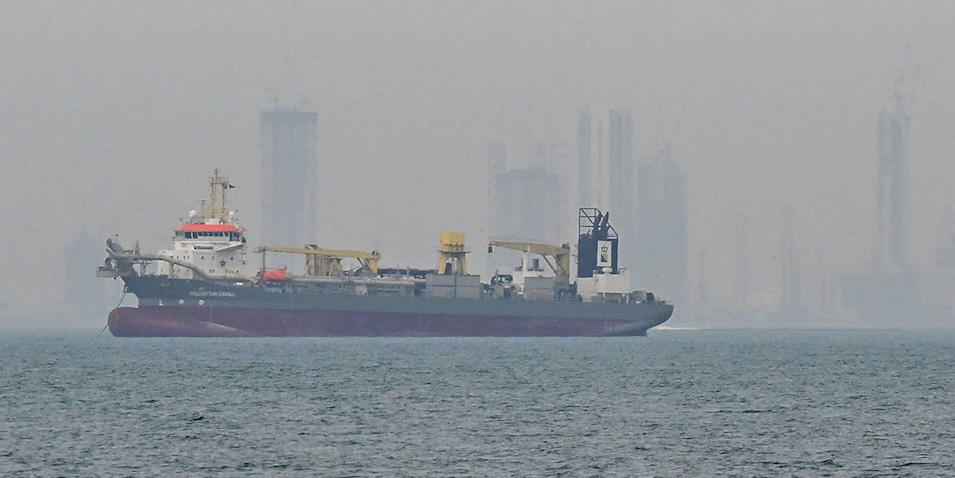
Trump may have wanted a localized confrontation, but he has instead lit a match in the center of the global energy system. The Strait of Hormuz, the most important global maritime transit chokepoint for oil and liquefied natural gas (LNG), is now operating at minimal capacity.
In response, Trump has proposed underwriting war-risk insurance for freight shipping and providing US Navy escorts to reopen the strait. But financial guarantees and military convoys cannot remove the fundamental insecurity of transit while tankers remain vulnerable to missiles, drones, and asymmetric attacks. As long as vessels are being targeted, confidence will remain low, and flows through the strait constrained, leaving global energy markets exposed to further disruption.
If loading cannot resume soon, storage constraints will force production slowdowns across the Gulf, tightening global supply and putting additional upward pressure on crude prices. Despite the uptake of renewables in recent years, hydrocarbons remain firmly embedded across the global economy. Saudi Arabia, Qatar, the United Arab Emirates, Kuwait, Iraq, and Iran anchor supply chains that power everything from Asian industry to European manufacturing and global transport.
No clear end in sight
Making matters worse, there is no clear end in sight. The killing of Iran’s supreme leader, Ayatollah Ali Khamenei, marks a rupture of historic magnitude, but a leadership decapitation does not constitute regime change. If anything, history suggests that central authority is as likely to be consolidated as it is to break down. Not only are Iran’s governing institutions and the Islamic Revolutionary Guard Corps still intact; they are also armed with sufficient missile stockpiles to sustain the current tempo of attacks for weeks. The regime’s capacity to retaliate has not been exhausted.
Duration is the decisive variable for energy markets. Whereas short conflicts produce volatility, prolonged instability reshapes trade flows, assessments of infrastructure risk, and investment behavior. The critical question now is not only whether the Strait of Hormuz will re-open, but how much more damage Iran will inflict on critical energy infrastructure.
Moreover, supply risks are compounding the transit risks. Iraq has already scaled back its oil production. Qatar has halted LNG output at key facilities following drone strikes. And the Saudis are bracing for further attacks on their infrastructure following strikes on the Ras Tanura complex, the home to the kingdom’s largest refinery, which processes roughly 550,000 barrels per day and functions as a key crude export terminal. With Gulf energy infrastructure now firmly in the “escalation perimeter,” producers are increasingly weighing security against continuity, and their precautionary adjustments are reducing the resilience of the entire system.
That is why oil prices have risen sharply – by more than 20% since the start of 2026. Markets are responding both to lost barrels and to the growing uncertainty about how long infrastructure will remain exposed. And gas markets face even tighter constraints. Unlike oil, LNG trade operates with minimal spare capacity. If Gulf disruptions persist for weeks, buyers will compete for limited cargoes.
Europe is particularly vulnerable. After a colder-than-expected winter, its storage levels are low heading into the refill season. Although most LNG transiting Hormuz is destined for Asia, global gas markets are interconnected. When Gulf supply tightens, competition intensifies. Rebuilding storage will become more expensive and politically sensitive. If LNG flows remain impaired, Europe will face a more precarious balance heading into next winter.
Nor are the repercussions of shortages confined to Europe. China, the world’s largest crude-oil importer, has built up reserves of roughly 1.2 billion barrels in onshore strategic and commercial storage, enough to cover more than 100 days of net imports at current levels. That stockpile can provide a meaningful cushion, but strategic oil reserves only buy time. If the instability persists, replenishment will become more costly, refining margins will tighten, and industrial input costs will rise.
Higher global prices also increase the relative attractiveness of discounted Russian hydrocarbons. In a tighter market, sanctioned crude becomes more competitive, potentially bolstering the Kremlin’s energy revenues. Prolonged Gulf instability could therefore reshape not only supply chains but geopolitical leverage.
Risks for emerging economies
Emerging economies face even graver risks. Higher oil and gas prices function as a global tax, filtering into food, transport, and electricity costs. For countries already grappling with inflation and debt distress, sustained volatility can destabilize currencies and fiscal balances.
What distinguishes the Iran war is not the risk of a single catastrophic outage, but rather that energy infrastructure has become a part of the wartime escalation calculus. For decades, Gulf hydrocarbon assets were widely viewed as economically too vital to be systematically targeted. But that tacit restraint is weakening. Targeted strikes and precautionary shutdowns signal that infrastructure now sits firmly in the line of fire.
Finally, markets are also reacting to the deepening uncertainty. Trump’s political messaging has oscillated between diplomacy, deterrence, and escalation, complicating energy investors’ efforts to assess the likely trajectory and duration of the conflict.
This conflict has been widely perceived as discretionary, rather than inevitable. If it lasts longer or proves more disruptive than expected, the global economic consequences will be severe. The blow to energy supplies will move through insurance markets, freight costs, storage cycles, industrial supply chains, and household fuel prices worldwide. Just days into the confrontation, energy markets’ worst fears are already materializing. A protracted war will transform volatility into structural pressure on oil and gas markets – an outcome worse than today’s uncertainty.
--
Carolyn Kissane is Associate Dean and Clinical Professor at the New York University School of Professional Studies Center for Global Affairs and Founding Director of NYU’s Energy, Climate, and Sustainability Lab.
Copyright: Project Syndicate, 2026. www.project-syndicate.org https://www.project-syndicate.org/about