

By Katalina Siasau
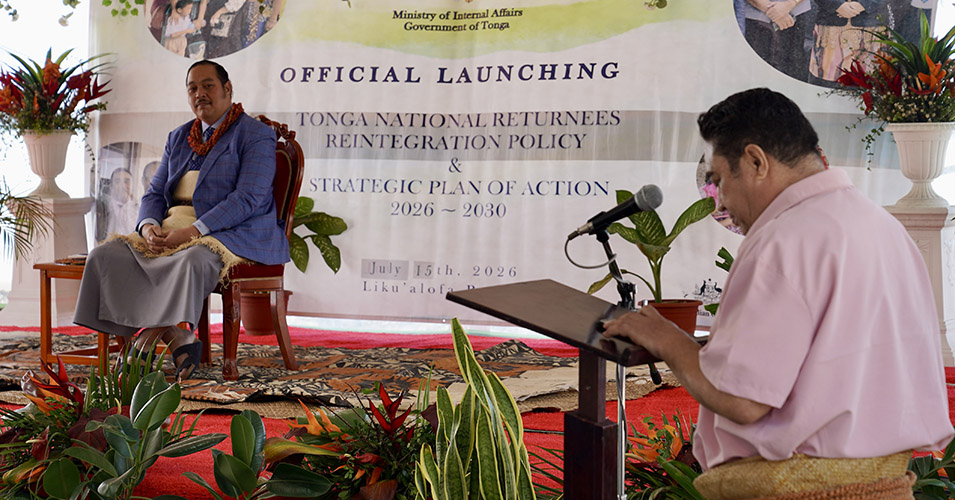
A concern that Tonga has limited resources to reintegrate returnees who have been deported from other countries was expressed by the Crown Prince, at the launching of Tonga’s first National Returnees Reintegration Policy and Strategic Plan, which aims to reduce stigma and strengthen community support for returnees.
The Government launched the policy plan on 15 July 2026, at Likuʻalofa Resort in Nukuʻalofa, with government officials, NGOs, churches, development partners, and guests.
A person who has returned to their country of origin, whether due to criminal deportation, family reunification, or visa overstaying, is referred to as a returnee. The policy aim is to help these individuals reintegrate into Tongan society, restore their connection with their communities, and help them regain a sense of spiritual belonging.
The keynote speaker, HRH Crown Prince Tupouto’a ‘Ulukalala, stressed that many are labelled “deportees,” which leads to stigma, alienation, poor job prospects, and mental health struggles.
Adding to these concerns, the Crown Prince said, “They come home to a country with limited resources. So support has been limited too, particularly as their reintegration needs are significant.”
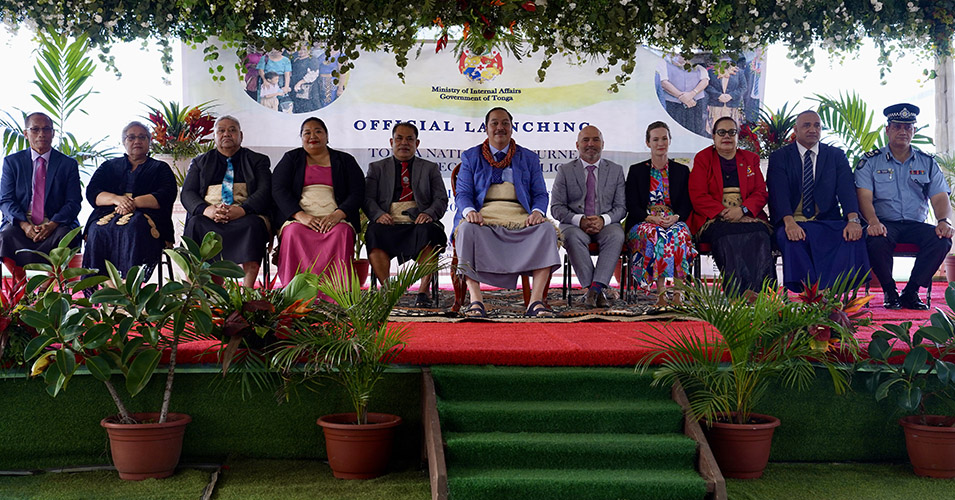
In 2023, Cabinet approved the Government Returnees Committee and established the Tonga Returnees Support Programme, run by the Ministry of Internal Affairs (MIA) and funded by the New Zealand Government. Australia later provided technical assistance through a grant to help develop this policy and further support the programme.
In 2024, the Tonga Police National Crime Investigation Unit reported that more than 1,473 Tongans returned to Tonga. The largest share, 47%, came from New Zealand. Most of the returnees were young men aged between 25 and 35.
The Crown Prince said returnees could bring valuable skills to their communities and urged the public to welcome them with compassion.
“In the same spirit as the late Queen Sālote said, ‘We are different from each other, but each of us has a human heart.’ So no matter where returnees’ journeys have taken them, their worth and dignity remain unchanged. Coming home is a new chapter, but it is not the end of their story. Every hardship they have faced abroad has built resilience and skills that can strengthen families, communities, and our country,” he said.
“Communities, we ask you to welcome our returnees with compassion and practical support: jobs, connection, healing, inclusion, and by honouring the unity and care that Queen Sālote stood for.”
New beginning
A returnee, Mr Jay Latu, who left Tonga in 1971 when he was an infant and returned in 2016, made a heartfelt plea to communities.
He spoke about coming back to Tonga and witnessing the increasing impact of crystal meth in the country.
“As returnees, we understand this enemy. Many of us grew up in Western cities where we saw first-hand how drugs destroy neighbourhoods, fuel crime, and tear apart lives. We know the traps, we know the signs of addiction, and we know the pain on the streets. But we also know the way out.
“We are not here to be a burden to Tonga. We are here to be a shield.”
Through this government programme, he said returnees are willing to work directly with young people, churches, and schools to combat illicit drugs.
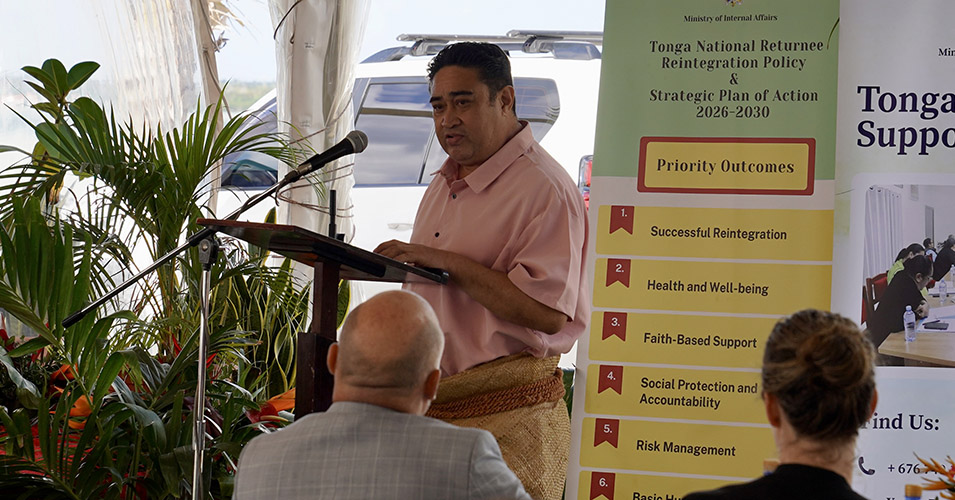
The policy is the result of collaboration between government ministries, NGOs, churches, communities, development partners, and returnees, with the vision of “Full Reintegration and Restoration of Returnees to Life.”
Its eight key priority areas include successful reintegration; health and well-being; faith-based support; social protection and accountability; risk management; basic human rights; safety and security; and collaboration with foreign stakeholders.
With the policy now in place, it provides a structured framework for effective oversight and governance of reintegration efforts.
The Tonga National Returnees Reintegration Policy & Strategic Plan of Action 2026-2030 is the first policy of its kind in Tonga.